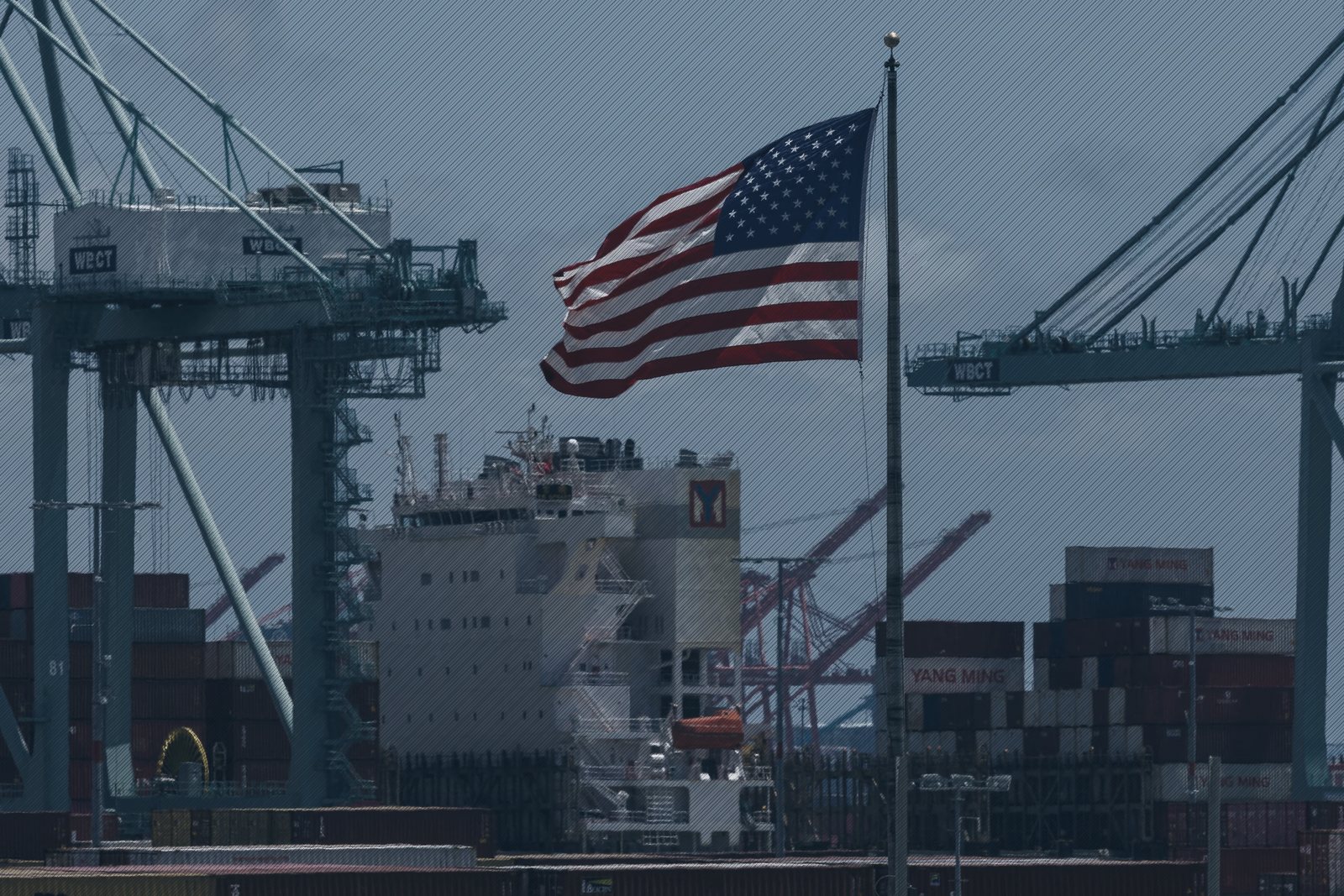
The Trump administration has found a new legal route back to the tariffs the Supreme Court struck down. On Wednesday the Office of the US Trade Representative proposed duties of up to 35 per cent on goods from 14 economies, including China, the European Union, Japan and India, after concluding that their governments sustain "structural excess capacity" in manufacturing that burdens American commerce.
The duties are proposals, not law. Comments are due by 5 January, public hearings begin on 25 January and final action is expected early next year. But the direction is clear. Nine months after the Supreme Court ruled in February that tariffs imposed under the International Emergency Economic Powers Act were unlawful, Washington is rebuilding much of the same wall on a different foundation: Section 301 of the Trade Act of 1974, the provision used against China in 2018.
Who faces what
The proposed rates vary widely, and most come with a higher alternative if talks go badly.
The EU faces 15 per cent, which could rise to 20 per cent. Japan and Switzerland face up to 15 per cent, with an alternative of 20 per cent, and South Korea and Taiwan up to 15 per cent, with an alternative of 25 per cent. For these five the rates are calculated net of existing duties, keeping them broadly in line with the 15 per cent ceilings in the trade deals struck in 2025.
China faces up to 20 per cent on top of an existing forced-labour tariff, with an alternative of up to 40 per cent on all Chinese goods. Some Chinese products would pay a lower 10 per cent and others would be exempt, reflecting commitments in last year's Kuala Lumpur arrangement between the two countries.
The steepest rates fall on Asia's manufacturing hubs. Vietnam faces up to 35 per cent, India up to 25 per cent and Singapore up to 20 per cent, though each could pay less if it signs a reciprocal trade agreement. Indonesia, Malaysia, Thailand, Cambodia and Bangladesh face up to 18 per cent.
For every economy except China, goods already covered by separate national-security tariffs, including steel, aluminium, cars, patented medicines and semiconductors, are excluded. Mexico and Norway were also investigated, but no decision has yet been reached on either.
A replacement, not an escalation, for most
For Europe and Japan the proposal is less a new shock than an attempt to restore the status quo before February. Ed Mills of Raymond James described it as an effort to rebuild the tariff structure that existed before the court intervened. According to the Yale Budget Lab, the effective US tariff rate across all trading partners is now about 11.3 per cent, down from 13.86 per cent before the ruling and above 15 per cent for much of 2025.
That does not make the move painless. The EU has already said it expects any new measures to respect the 15 per cent ceiling agreed with President Trump in Scotland in July 2025, even when combined with existing duties. Olof Gill, a spokesman for the European Commission, said Brussels would study the findings but rejected the idea that Europe is a source of structural overcapacity. Europe, he argued, is among the regions most exposed to it. Switzerland also rejected the allegations.
China called the overcapacity claim "a false issue". Guo Jiakun, a foreign ministry spokesman, said Beijing opposed using it "as an excuse for political manipulation". The timing is delicate: the truce between the two countries expires on 10 January, five days after the comment deadline, and the latest round of talks ended without an agreement to extend it.
Why Britain is not on the list
Britain was not among the 16 economies investigated. Washington has not explained the omission, but Britain was the first country to reach a trade deal with the Trump administration, in May 2025, and the United States runs no large goods deficit with Britain, unlike its deficits with the EU, China or Vietnam.
For British exporters, that is a relative advantage. Goods made in Britain may now face lower American duties than competing goods from the EU, just as Britain moves to align more closely with Brussels on food and carbon rules under the reset deal agreed last week. It also exposes a tension in British trade policy: the closer Britain draws to the EU's rulebook, the harder it may become to keep a separate and gentler deal with Washington.
The economic cost
The tariffs are paid by American importers, not foreign governments, and the question is how much is passed on to consumers. The timing is awkward for the Federal Reserve. Figures published on the same day showed the personal consumption expenditures price index, the Fed's preferred inflation measure, rising 3.8 per cent in the year to October, with core inflation at 3.3 per cent, its highest in three years. Elizabeth Renter, an economist at NerdWallet, said tariffs "continue to have some impact" on prices. Markets fully expect a rate rise on 9 December.
Rachel Ziemba of the Center for a New American Security warned that the move could add to inflation pressure and market volatility in 2027. Markets felt it immediately. The Nasdaq fell almost 4 per cent in early trading on Wednesday before recovering most of the loss, and the Dow ended higher after erasing a fall of more than 1,100 points.
There is also a legal question. Gregory Shaffer of Georgetown Law called the use of Section 301 "cynical", arguing that it lets the president set and change tariffs at will and bypasses Congress's power to tax. Legal challenges are likely once the duties are final.
What to watch
The coming weeks will test whether the proposals are a negotiating weapon or a fixed policy. The rates for Vietnam, India and Singapore fall sharply if they sign agreements, and the alternative rates for China, South Korea and Taiwan rise sharply if talks fail. EU trade ministers are due to meet on 30 November, with Jamieson Greer, the US trade representative, expected to join by video.
For now, the message to America's trading partners is that the Supreme Court changed the legal basis for Mr Trump's tariffs, not his intention to use them.