
Europe has become remarkably fluent in the language of sovereignty. It speaks of strategic autonomy, economic security and technological independence, and of the need to defend its interests in an increasingly hostile world. Yet when the discussion turns from these ambitions to the money required to sustain them, the European project runs into the limits of its own political construction.
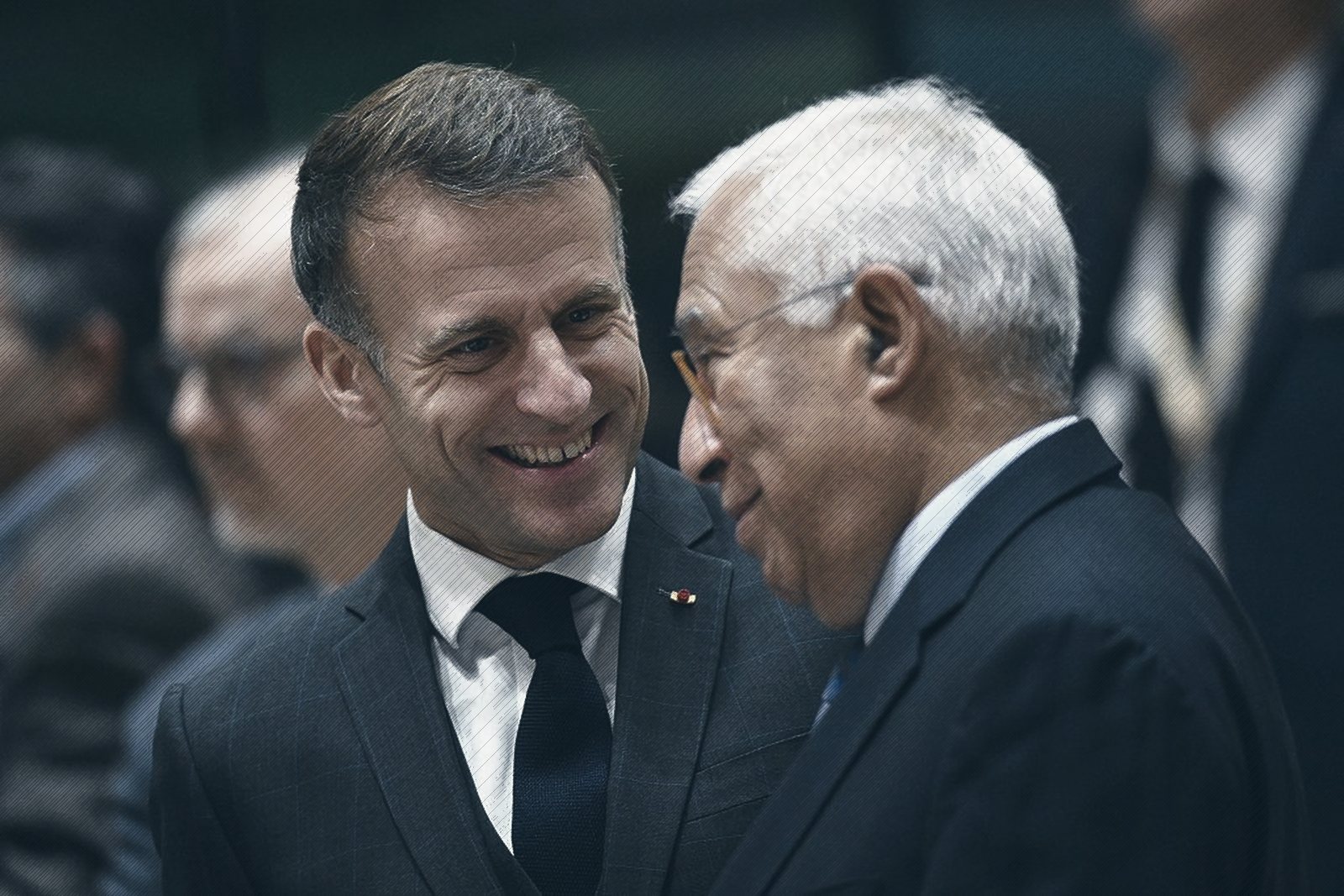
The contradiction was on display in Brussels this week. At a summit on 26 November, European Union leaders failed to agree the bloc's next seven-year budget, the multiannual financial framework for 2028–2034, which will pay for everything from agriculture and regional development to research, defence and Europe's external partnerships. The talks ended shortly before 1am after a single evening session; António Costa, President of the European Council, cancelled the second day and conceded: "We have not reached an agreement."
The dispute was not simply over whether the budget should be larger or smaller. It concerned what the European Union is now expected to become, and how much financial responsibility its member states are prepared to share.
Costa had tabled a compromise of €1.58 trillion in 2025 prices, about 10 per cent below the European Commission's original proposal. It tried to satisfy competing demands by shifting money towards security and competitiveness while preserving substantial support for agriculture and regional cohesion. It satisfied almost no one. Seven net contributors, among them Germany, the Netherlands, Sweden and Denmark, refused to take part in Costa's small-group meetings and pressed for a smaller budget, while a large majority of governments insisted that farm and cohesion funds should not be squeezed further. Giorgia Meloni, Italy's prime minister, said the two sides were "light years away" from a solution.
It is tempting to read this as another episode in the familiar drama of European budget talks. Governments defend their national contributions, farmers and regions demand continued support, new priorities compete with established programmes, and eventually, under enough pressure, a compromise emerges. That reading is not wrong. It is, however, becoming dangerously incomplete.
The Union is trying to take on responsibilities that its traditional fiscal arrangements were never designed to carry. The difficulty is not merely that governments disagree about spending. It is that Europe increasingly seeks the economic and political influence of a major power while keeping the financial habits of an association of sovereign states.
The inheritance of an earlier Europe
The European budget was never conceived as the principal instrument through which the continent would exercise geopolitical power. Integration followed a different historical logic. Its early institutions sought to bind national economies together, reduce the likelihood of war and create a common market capable of generating shared prosperity. Agricultural policy became a central part of that arrangement; regional development programmes later helped narrow the gap between richer and poorer territories.
That spending served an economic purpose, but it also had a political function: it made integration tangible. For farmers, membership could bring a degree of income stability. For poorer regions, it brought infrastructure and development support. For national governments, it helped build domestic acceptance of a process that inevitably meant surrendering some powers. This was not incidental to the European project. It was one of the mechanisms that made it politically sustainable, and the common budget grew up around policies that distributed identifiable benefits among member states.
Defence, by contrast, remained largely a national matter. Strategic security was associated with NATO, and many of the largest investment decisions were taken through national budgets and private capital markets.
That division of labour fits Europe's circumstances less and less. The continent now faces war on its eastern border, pressure to expand its defence capabilities, an intensified contest over advanced technologies and heavy investment needs in energy and infrastructure. None of these respects national borders. A missing interconnector imposes costs beyond the country where it is missing. Technological dependence can leave a whole region exposed to decisions taken elsewhere. Defence weaknesses in one part of Europe affect the security of the rest. The economic case for common action has grown stronger; the fiscal machinery behind it has changed far more slowly.
A small budget carrying large expectations
The Commission's original proposal, published in July 2025, came to almost €2 trillion in current prices over seven years, equivalent to about 1.26 per cent of the Union's gross national income. The figure sounds impressive until it is set against the combined spending of Europe's national governments, which is many times larger.
This does not mean the Union needs a federal budget on the American scale. Its responsibilities are different, and many essential services are properly financed and delivered nationally. But the comparison raises a real question of economic organisation. If a responsibility is genuinely European, should its financing depend chiefly on repeated negotiations between governments each trying to minimise its own contribution?
National bargaining is understandable. Governments answer to their own taxpayers and must balance spending, borrowing and competing social obligations. For countries with weak growth or high public debt, a larger contribution is not a costless gesture of European solidarity. Denmark's prime minister, Mette Frederiksen, rejected Costa's plan partly because it could have raised her country's contribution by about 12.1bn Danish kroner a year.
Yet legitimate fiscal restraint is one thing; an institutional system that struggles to finance activities whose benefits cross borders is another. When almost every government recognises a common problem but each has an incentive to let others carry more of the cost, economists call it a collective-action problem. Its solution does not require unlimited spending. It requires institutions that align responsibility for common objectives with responsibility for paying for them. The Brussels talks showed how incomplete that alignment remains.
The misleading choice between farmers and security
Much of the disagreement is presented as a contest between established programmes and new strategic priorities. Costa's proposal shows the attempted balance. Under his framework, agriculture, fisheries and cohesion would account for 42.4 per cent of the budget, compared with 59.1 per cent in the current framework, while competitiveness, security and defence would rise from 17.7 per cent to 27.7 per cent, with substantially more money for defence in absolute terms.
That is a significant shift in priorities. It does not mean that traditional European policies have suddenly lost their economic importance. Agriculture involves more than income transfers: it concerns food production, rural economies and risks that private markets do not always spread well. Regional cohesion is more than compensation for poorer territories: transport networks, education and local investment strengthen the single market itself.
Poorly designed support can, of course, preserve inefficient activity and become politically impossible to reform, and such programmes deserve rigorous evaluation. But abandoning them without regard to the economic and political functions they perform would create a different set of problems. A Union that spends more on collective security while letting regional inequalities deepen could erode the domestic support on which integration depends.
The relevant question, then, is not whether Europe should choose security over cohesion, or competitiveness over agriculture. It is whether spending in each area produces benefits commensurate with its cost, and whether those benefits are best delivered at European, national or regional level. That is a harder exercise than moving money between politically convenient headings, because it requires agreement about what integration is meant to achieve.
The search for European revenue
The financing debate exposes a second structural weakness. Costa's compromise tries to limit the rise in national contributions, which would increase on average from about 0.80 to 0.82 per cent of member states' gross national income. To fill the gap, it proposes new revenue streams: a 3 per cent levy on the turnover of large digital companies, a national contribution linked to uncollected electronic waste, revenue from the carbon border adjustment mechanism and the emissions trading system, and a contribution based on tobacco excise. Together with existing sources, these would raise about €60bn a year.
The appeal is obvious. Revenue collected at European level eases the direct pressure on national treasuries and gives common spending a more predictable base. But calling a revenue source European does not make its cost disappear. Taxes and levies are ultimately borne by some combination of consumers, workers, businesses and investors, depending on market conditions and design. A digital levy may affect profits, prices or investment; carbon charges change behaviour as well as raising money, and their yield will fall if they succeed.
There is no contradiction in using such instruments to finance common policies. There is, however, a danger in presenting them as a way to escape the underlying question of who pays. European revenue should be judged by its economic effects, not by how well it hides national contributions. A financially sustainable Union needs clarity about the obligations it is taking on and the resources required to meet them.
Ukraine and the cost of uncertainty
The talks were made harder because the long-term budget is being negotiated alongside Ukraine's immediate needs. On 18 November the Commission proposed a further loan of €45bn for 2027, to cover economic and military needs, financed by EU borrowing and repayable by Ukraine only once Russia pays war reparations. That is a separate decision from the 2028–2034 framework, but the two are now politically linked. Friedrich Merz, the German chancellor, said Germany would not back the budget unless all 27 member states took part in financing Ukraine, while Hungary, Slovakia and Bulgaria have resisted being drawn into common arrangements for military support.
The disagreement raises legitimate questions about burden-sharing, the legal structure of borrowing and the distribution of risk. Common borrowing creates obligations that outlast the moment the money is raised, and its credibility depends on the arrangements behind repayment and on governments' willingness to honour them.
Prolonged uncertainty carries its own costs, though. Recipients must plan spending, lenders need to understand the guarantees behind the borrowing, and governments must know what it means for their own budgets. A decision postponed because its financing is politically awkward does not necessarily become cheaper later; where security commitments are involved, delay can raise the eventual financial and strategic bill. The dispute is therefore not simply about generosity towards another country. It is a test of whether European governments can turn a shared assessment of strategic interest into a predictable financial commitment.
The political calendar and the problem of continuity
There is a further complication. Several member states, France among them, hold national elections in 2027, and their governments may look very different by the time the new budget starts in 2028. Leaders have therefore tried to finish the negotiations before the end of this year. The logic is practical: an agreement now leaves time to adopt the legislation and set up the programmes through which the money will flow.
But the calendar cannot substitute for democratic legitimacy. Governments elected by national voters remain answerable to them, and a long-term European agreement should not be a way of avoiding public scrutiny or political disagreement. At the same time, a financial framework cannot work if every change of government puts earlier commitments in doubt.
Here lies one of the enduring tensions of European integration. The Union needs continuity to make investments whose benefits emerge over decades, while its political authority remains tied to national democratic processes that run on shorter timetables. Faster negotiations alone cannot resolve that tension. It requires commitments that governments regard as legitimate enough to survive changes of leadership at home.
The legal framework reflects the complexity. The long-term budget must be adopted unanimously by member states and requires the consent of the European Parliament. That gives every government strong protection against commitments it does not accept, and it makes agreement difficult when priorities diverge sharply. This is not merely a defect. It reflects the fact that the Union remains a political construction in which sovereignty is shared but not centralised. The challenge is to make that arrangement capable of effective economic action.
Deciding what to finance together
The debate is often reduced to how much the Union should spend. The more consequential question is which spending should be genuinely European. Some public responsibilities are best managed locally, others nationally. Still others, such as cross-border infrastructure, scientific research networks and certain security capabilities, produce benefits that no single member state acting alone can capture.
A useful European budget would begin by identifying those functions and establishing where collective financing adds value that national spending cannot. That would not end disagreements about priorities, but it would give a more defensible basis for settling them. It would also require a willingness to evaluate existing programmes rather than preserve them because they have acquired loyal constituencies, and the same scrutiny should apply to new strategic spending. Programmes labelled essential to competitiveness or security should not be exempt from questions about efficiency, delivery and measurable results.
The Union's credibility depends partly on showing that common resources produce common benefits. Without that discipline, a bigger budget could mean more spending without more economic strength. Without adequate resources, ambitious commitments risk becoming declarations without the means to fulfil them. Neither outcome would solve Europe's problem.
What the Brussels failure means
This week's failure does not prove that the European project cannot adapt. Negotiations remain open, and leaders will return to the budget at their summit opening on 17 December. The Union has repeatedly reached agreement after long periods of deadlock, and its history offers no reason to assume the current impasse is permanent.
But the shape of the disagreement deserves recognition. Europe's strategic ambitions have expanded faster than the financial consensus needed to support them. Governments accept the case for stronger collective capabilities while differing over their cost, distribution and governance. Traditional programmes stay politically important because integration has always depended on visible economic benefits; new priorities demand resources because the world around Europe has changed. None of these tensions can be resolved by treating the budget as a technical exercise.
A common market can function with a modest central budget. A Union seeking greater responsibility for security, technology and strategic resilience faces different financial requirements. Whether those responsibilities should grow, and on what terms, remains a legitimate subject of democratic argument. The financial implications, however, cannot be avoided.
Europe does not lack the means to exercise greater influence. Its member states together command an enormous industrial base, substantial private wealth and formidable scientific capabilities. What remains contested is how far those resources should be mobilised collectively. That is the real question behind the figures discussed in Brussels. The European budget is not simply a record of what member states are prepared to contribute; it is a statement of what they are prepared to do together.
Until those two commitments are brought into line, Europe's ambitions will keep outrunning the arrangements that finance them. The problem is not that sovereignty has become an irrelevant idea. It is that sovereignty, exercised collectively, requires more than a shared vocabulary. It requires an agreement on responsibility, including the responsibility to pay.