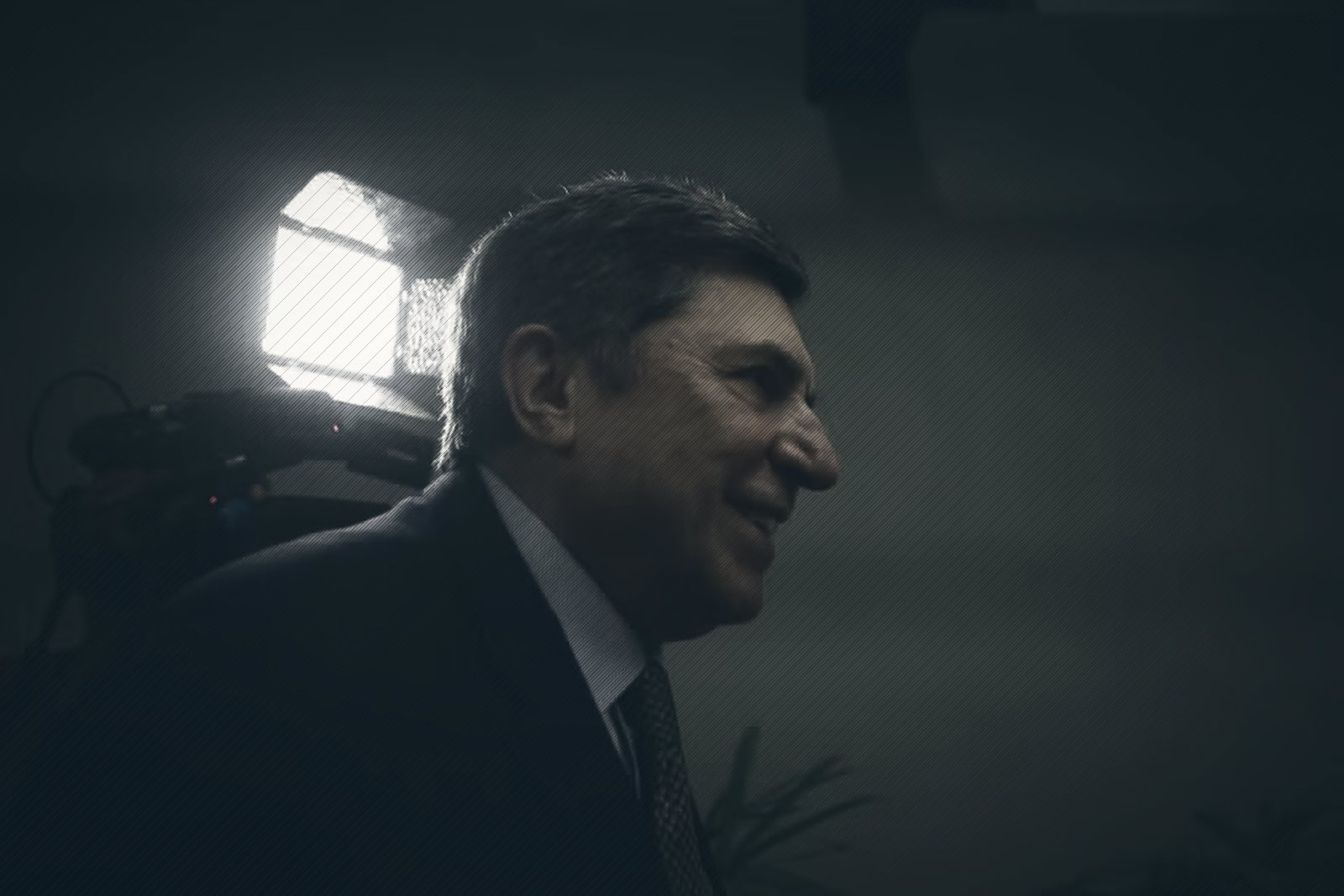
When Brazilian markets crashed after Luiz Inácio Lula da Silva won a fourth term last month, investors were sending a message: they did not trust his government with the public finances. On Thursday night Lula sent one back. The presidential palace announced that Luiz Carlos Trabuco, the chairman of Bradesco, one of Brazil's largest private banks, had accepted his invitation to become finance minister.
The market's answer was immediate. The Ibovespa jumped 6.1 per cent on Thursday and rose more than 3 per cent again on Friday. Bradesco's shares gained 11.6 per cent in a day, and a fund of Brazilian shares traded in New York rose almost 10 per cent. Few appointments anywhere have moved a market so fast.
The question is whether one name can fix what the election exposed. The rally prices in a hope. The arithmetic will decide whether it is justified.
Who he is
Mr Trabuco, 75, joined Bradesco as a clerk in 1969, at 17, and spent the next 58 years there. He ran its insurance arm, served as chief executive from 2009 to 2018, when the bank bought HSBC's Brazilian business, and has chaired its board since. He has also led the board of Febraban, the banking federation, and has advised Lula informally since the president's second term.
To investors, he represents something they have doubted since October: a minister who will put the budget first. In an interview this month he described the government's first post-election fiscal package as "a good start" and said the cost of capital "weighs on those who consume, invest, lend and finance dreams". It was a banker's way of saying that Brazil cannot grow while its interest rates stay among the highest in the world.
He will take over from Dario Durigan, who succeeded Fernando Haddad earlier this year. Lula is due to be inaugurated for his new term on 5 January.
What he inherits
The problem is not hard to describe. Brazil's gross public debt reached 82.9 per cent of GDP in September, high for an emerging economy, and its overall budget deficit is close to 10 per cent of GDP, driven largely by the cost of servicing that debt. To contain inflation and reassure lenders, the central bank holds its benchmark rate at 13.75 per cent. High rates raise the cost of the debt, which widens the deficit, which keeps rates high. It is a loop that has trapped Brazilian finance ministers for a generation.
The government's opening move did little to break it. The spending curbs sent to the Senate this month would save up to 60bn reais, about $10.75bn, in 2027, roughly 0.5 per cent of GDP, mainly to keep the government on track for targets it had already set. "The adjustment Brazil needs is larger than this 2027 proposal," said Armando Armenta of AllianceBernstein. Bradesco and XP, two of the country's largest financial groups, have both cut their forecasts for growth next year to 0.3 to 0.4 per cent and expect inflation above 5 per cent, with gross debt approaching 88 per cent of GDP by the end of 2027.
The Levy warning
Brazil has tried this before. In late 2014, Dilma Rousseff, newly re-elected and facing a market revolt, appointed Joaquim Levy, a senior executive at Bradesco, as finance minister to restore confidence. He lasted less than a year. His austerity programme ran into resistance from Ms Rousseff's own Workers' Party (PT), the economy fell into a deep recession and Brazil lost its investment-grade rating.
That history is not lost on the PT. CNN Brasil reported that much of the party strongly opposes Mr Trabuco and fears an "efeito Levy", a repeat of that episode. Party figures have already attacked the fiscal package: Lindbergh Farias, a PT legislator, complained that "no one talked about a fiscal adjustment" during the campaign. A finance minister can propose cuts. Only the president can defend them against his own party, and only Congress can pass them.
There are reasons to think this time could be different. Mr Trabuco is not a technocrat parachuted in from outside but a long-standing adviser to Lula, with deep ties to the business world. He has received a warm welcome from the presidents of both houses of Congress and from industry groups. Davi Alcolumbre, the Senate president, praised his "technical capacity" and "skill at dialogue". Unlike Mr Levy, he arrives before the new term begins, with time to shape the budget rather than rescue it.
What would make the rally last
Markets have rewarded the appointment. They will judge the minister. Three tests will matter.
The first is the fiscal rule. Economists broadly agree that Brazil needs larger primary surpluses, the budget balance before interest payments, to stabilise its debt. William Jackson of Capital Economics has said Lula must offer "something far more tangible", such as more ambitious targets or a new rule, if he wants lower interest rates soon.
The second is spending that grows automatically. Pensions and other benefits linked to the minimum wage, along with constitutionally earmarked spending on health and education, leave little room to manoeuvre. Reforming them is politically costly, and it is precisely where the PT will resist.
The third is the central bank. If Mr Trabuco can make the fiscal outlook credible, the bank will have room to cut rates, which would reduce the cost of the debt and turn the loop in Brazil's favour. That is the prize. It is also the test he is most likely to be judged on.
A signal, not a solution
Thursday's appointment is a clear signal that Lula has heard the market. It is not yet a policy. Brazil's last attempt to buy credibility with a banker ended in recession and a lost credit rating, because the president who appointed him would not, or could not, give him political cover.
Mr Trabuco's success will depend less on his own record than on Lula's willingness to spend political capital on unpopular decisions in the first year of his final term. The markets have placed their bet. The next few months will show whether the president has placed his.