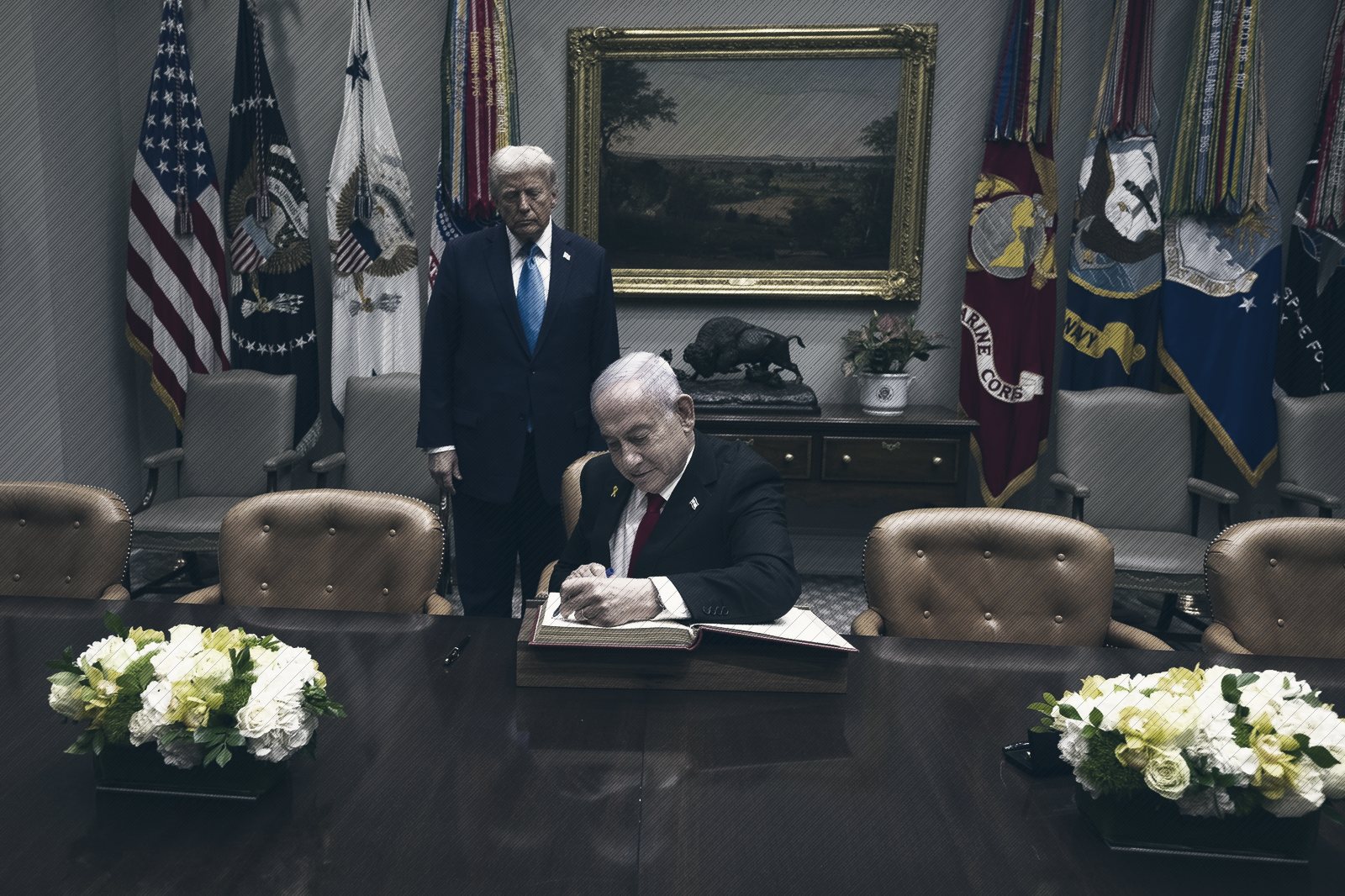
On election day in America, Donald Trump announced the end of an arrangement that has outlasted every Israeli and American government for half a century. "We were giving them $4 billion," he told Fox News. "But it gets cut off at the end of the year." He said Benjamin Netanyahu had agreed, even proposed it.
Mr Netanyahu's office has not commented. But in January he told The Economist that he wanted military aid reduced gradually. If the cut-off holds, Israel will lose most of the $3.8bn a year promised under a ten-year agreement signed in 2016, which was meant to run until 2028. That agreement was a pillar of Israel's security for two decades. It is being abandoned not after a strategic review but in a television interview, on the day Americans voted.
A partisan asset
The deeper failure is political. For years Mr Netanyahu treated support for Israel in Washington as the property of one American party. He lectured a Democratic president before Congress, courted the Republican right and bound Likud's fortunes to Mr Trump's. His governments drew their majorities from far-right parties: Otzma Yehudit, led by Itamar Ben-Gvir, and the Religious Zionist Party of Bezalel Smotrich, whose agenda of settlement expansion and annexation in the West Bank defies international law and closes the door on a Palestinian state.
The war in Gaza, waged by that coalition, finished the job. In July more than half of House Democrats backed eliminating military funding for Israel. On the American right, too, support is fraying: Mr Trump was reported by the Financial Times to have told a Jewish donor that "my people are starting to hate Israel". A government that set out to make Israel a cause of the American right has left it without a dependable friend in either party.
The economic cost
The timing could hardly be worse. The Bank of Israel estimated the cost of the wars at about 350bn shekels ($115bn) as of March, excluding the conflict with Iran. Mr Netanyahu has proposed a defence budget of 183bn shekels, about 9 per cent of GDP. Public debt is around 68 per cent of GDP. Israeli bonds and the shekel fell after last month's election left no bloc with a majority. Losing American aid at this moment means more borrowing, higher taxes or cuts elsewhere, all borne by Israeli citizens who did not choose this path.
Yair Golan, leader of the opposition Democrats, called it "another massive failure" by the prime minister. He is right that a responsible leader would have protected the alliance rather than gambled it on one man in the White House.
What should follow
Aid should never have been a blank cheque. Support for Israel's security is compatible with insisting on international law, an end to settlement expansion and a credible path to Palestinian statehood; indeed it depends on them. Israelis deserve a government that rebuilds trust with both American parties and with its neighbours, and Palestinians deserve the rights that the current coalition has spent years denying them.
Israel's election has given its voters a chance to change course. The coalition talks now under way will show whether they take it.