The bill for fear came due
Donald Trump tried to win an election about prices by talking about enemies. Voters noticed, and so did markets.
Vol. 01 / Issue 2 / 7 November 2026
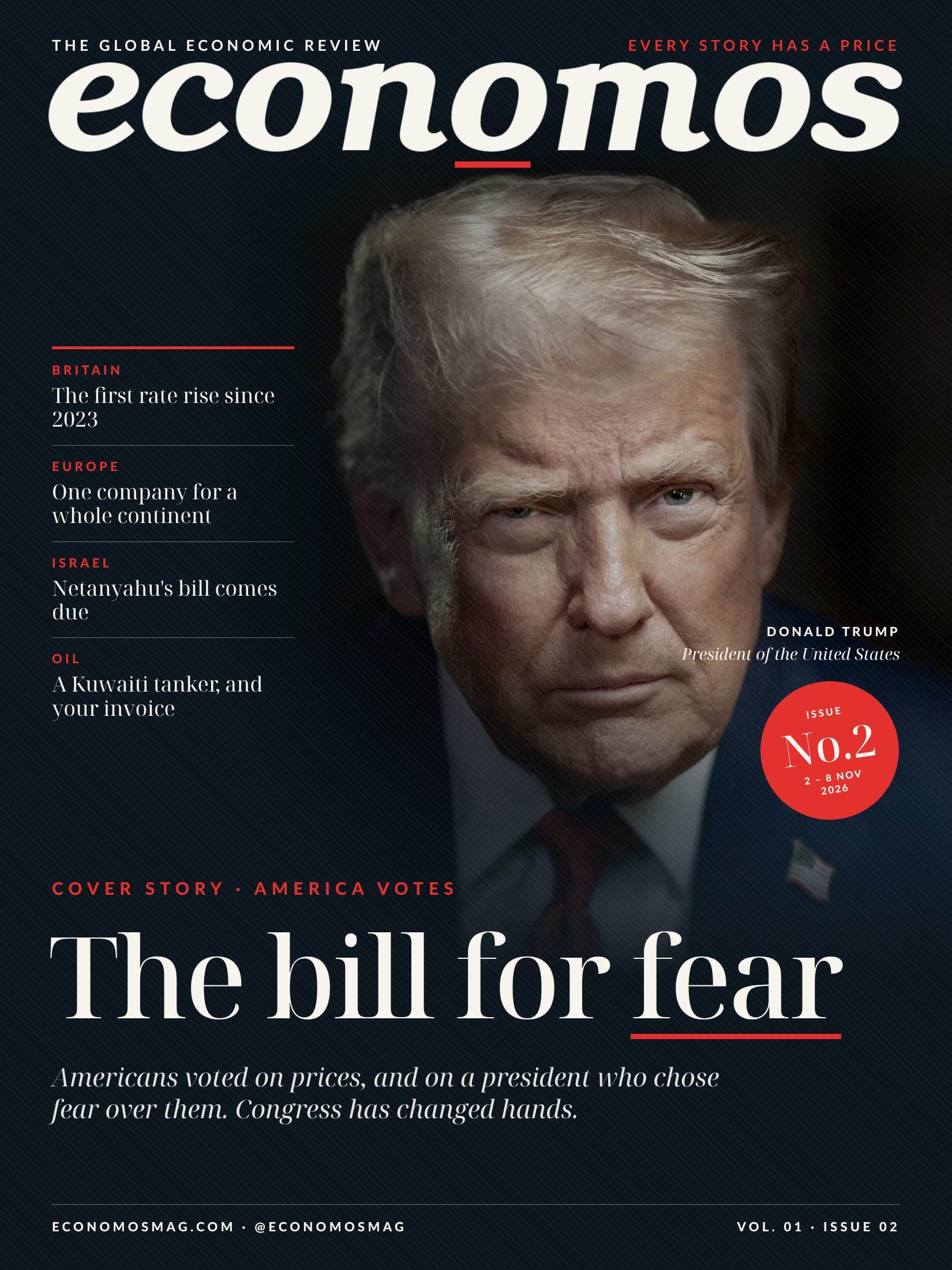
Americans voted on prices, and on a president who chose fear over them. Congress has changed hands.
Donald Trump tried to win an election about prices by talking about enemies. Voters noticed, and so did markets.
The party won the Senate with at least six gains and is projected to take the House, giving the president a divided government for the rest of his term. Stock futures fell.
Forty-three per cent of voters say they cast their ballot partly to oppose the president, and two-thirds say his policies have made the economy worse, according to early exit-poll results.
The Dow jumped 1,200 points as investors bet on more predictable policy. Solar stocks, hospitals and Big Tech led; defence contractors, private prisons and Trump-linked shares fell.
The Monetary Policy Committee voted 8–1 to lift Bank Rate to 4 per cent and warned that inflation will approach 5 per cent next year unless the conflict in the Middle East eases.
EU governments have backed 'EU Inc.', a pan-European company that could be registered online in 48 hours for under €100, but want more time and more control.
Ending America's $4bn a year to Israel is the price of a government that tied the country to the American right and to its own far-right partners.
Hackers drained the world's biggest crypto exchange in about 20 minutes in what is probably the largest theft on record. The FBI blames North Korea, which calls the charge "absurd rhetoric".
Profits are healthy and capital buffers remain substantial. Yet growing exposure to government debt deserves closer attention.
Employees are completing tasks faster, but businesses are discovering that saving time and creating economic value are two different things.