Britain's shoppers have delivered an unexpected lift to retail sales. The uncomfortable question is whether they were spending because they felt more secure, or because they were preparing for something to go wrong.
On Friday the Office for National Statistics reported that retail sales volumes rose by 0.7 per cent in October, comfortably beating economists' expectations of no change and reversing a 0.6 per cent fall in September. Sales were 2.3 per cent higher than a year earlier, and volumes rose 0.4 per cent over the latest three months.
Ordinarily these would be encouraging figures for an economy wrestling with expensive borrowing, rising inflation and doubts about future growth. But October was not an ordinary month.
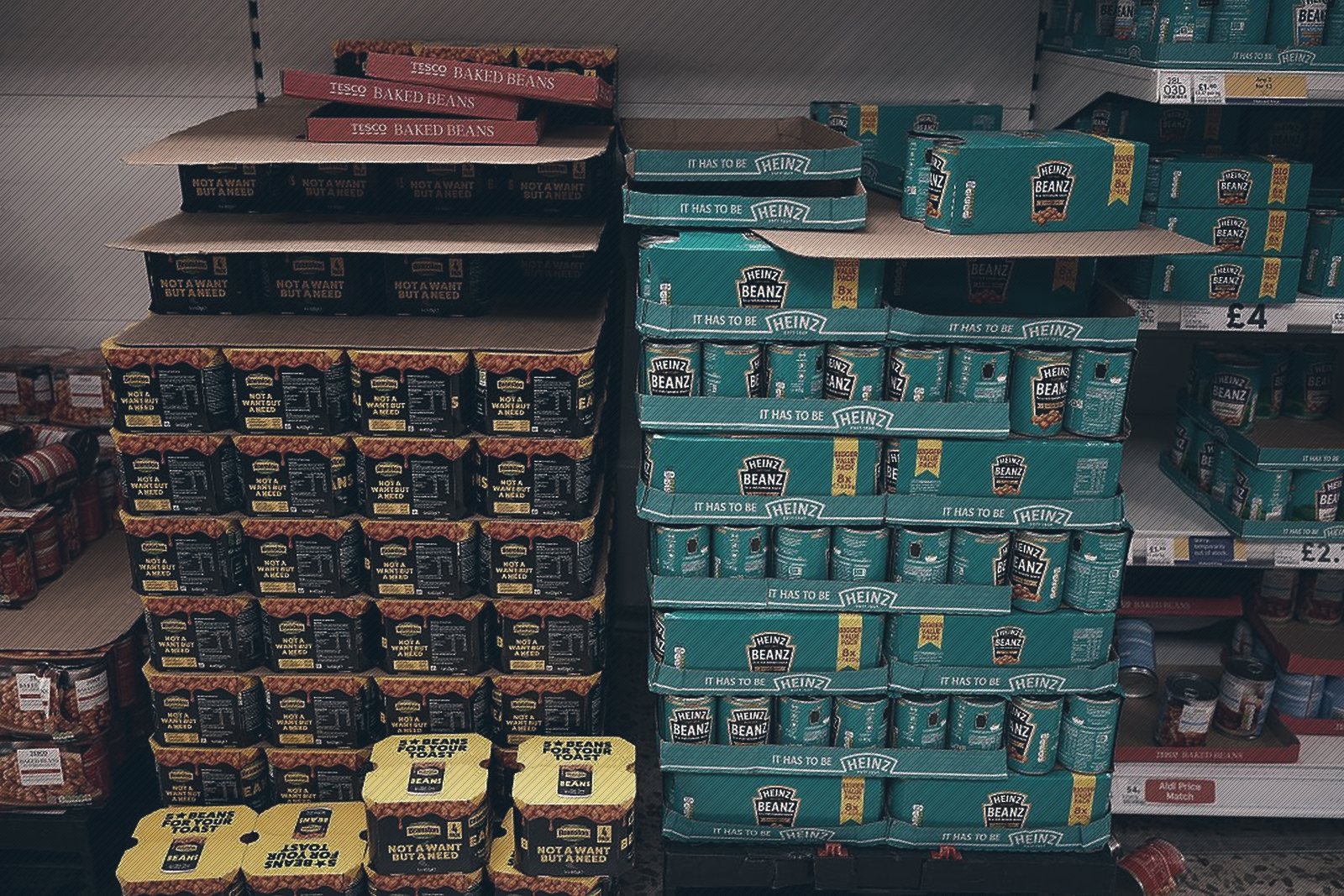
Supermarkets reported stronger sales of tinned food, long-life milk and other staples after the government launched its Be Ready campaign on 22 October. The campaign encourages households to keep enough essentials to last three days of disruption, whether caused by severe weather, a failure of infrastructure or another emergency.
The advice is sensible. A population able to cope with temporary disruption puts less strain on essential services. Yet the economic implications deserve a closer look. When consumers buy more because they are worried about the supply of essentials, spending can rise even as confidence falls. That is not a conventional recovery in consumption. It is partly an adjustment to perceived risk, and it reveals something about the state of the British economy that a reassuring headline figure might otherwise hide.
The difference between buying more and feeling better
Economic statistics are indispensable, but reading them takes judgement. Retail sales measure the quantity of goods bought, not the motives behind each purchase.
A household buying extra food because its income has risen is behaving differently from one buying the same products because it fears disruption. Both transactions lift measured sales. Their implications are not the same. The first may signal rising purchasing power and greater confidence in future income. The second may be precautionary spending brought forward from later months: a family that lays in several weeks of non-perishables in October may need to buy fewer of them in November or December. The increase in sales is real. Whether it marks a lasting rise in demand is another matter.
Emergency buying does not explain all of October's improvement. Non-food sales rose 1.1 per cent, clothing stores did well as the weather turned colder, art galleries also contributed, and online spending rebounded. There were genuine signs of activity beyond the emergency cupboard.
But the published figures do not say how much of the increase came from precautionary purchases, and that uncertainty is itself a reason for caution. Economists should resist treating every surprise in spending as proof that households feel more comfortable with their finances.
The latest confidence surveys offer a useful counterpoint. The GfK consumer confidence index fell 11 points to minus 24 in October, its sharpest monthly drop since the start of the pandemic in 2020. November brought only a modest recovery, to minus 22, still a deeply negative reading.
Retail spending rose, in other words, at exactly the moment consumers were reporting a marked deterioration in their outlook. There is no contradiction once the reasons for spending are considered. People can worry about the future and still buy more today. Sometimes their anxiety is the reason they do.
The state is asking households to prepare for uncertainty
The Be Ready campaign marks an interesting shift in the relationship between the British state and the public. Its purpose is not to predict an imminent national emergency; the government presents it as a practical effort to prepare for the kinds of disruption modern societies periodically face. Severe storms, floods, interruptions to water supply and failures of communications networks can all cut households off from essential services for a time. Encouraging people to keep modest reserves of food, water and other necessities is a reasonable part of civil preparedness, and several European countries have taken similar steps.
The economic significance goes beyond the contents of an emergency cupboard. Modern economies depend on systems most people rarely think about until they fail. Electricity underpins almost every form of commerce. Digital payments depend on communications networks. Supermarkets rely on logistics chains that refill shelves continuously. The efficiency of these systems has cut costs and improved convenience. It has also made everyday economic life highly dependent on their uninterrupted working.
Households are normally encouraged to rely on the market to supply goods whenever they are needed. A preparedness campaign asks the same households to recognise that there may be moments when it cannot. The two propositions are not incompatible, but together they illustrate a broader change in economic thinking: resilience is becoming a more visible concern in the management of both public infrastructure and household finances.
The difficulty is that resilience costs money. A family keeping extra supplies must devote cash and cupboard space to goods it may not need soon. A company holding larger inventories ties up working capital. A government strengthening infrastructure must decide how to pay for it. The benefits can be substantial when disruption strikes; in normal times the spending can look unproductive. That is the familiar economics of insurance, whose value is most obvious when something goes wrong.
Inflation makes preparedness more expensive
For British households the calculation is getting harder. Consumer-price inflation rose to 3.6 per cent in October from 3.5 per cent in September, pushed up by higher petrol and diesel prices. The Bank of England expects it to climb further, to about 5 per cent by the middle of 2027, as higher energy costs work through the economy. Earlier this month the Monetary Policy Committee raised Bank Rate to 4 per cent to stop those pressures becoming entrenched.
The decision was defensible within the Bank's mandate. A central bank cannot produce more oil or gas when energy costs rise; it can try to stop the initial shock spreading into wider wage and price expectations. But tighter policy creates an unavoidable squeeze. Higher borrowing costs eat into disposable income, especially for mortgage holders and people with variable-rate debt, while inflation erodes the value of pay that does not keep up.
The Bank is trying to stop a temporary price shock from becoming persistent inflation. Households, meanwhile, must cope with the higher prices they already face, and the adjustment is neither immediate nor evenly spread. A household with substantial savings may absorb higher energy bills without changing its spending much. One with thin reserves may have to cut back on discretionary purchases. For that household, even the modest cost of an emergency stock can be a real burden.
The government's advice may be economically prudent, but the ability to follow it is not equally shared. Preparedness is easiest for those with the resources to prepare. A policy that assumes households can keep extra supplies should recognise that some families struggle to pay for their ordinary weekly shop.
A stronger retail figure does not solve the growth problem
The British economy has proved more resilient this year than many forecasts expected. GDP grew 0.7 per cent in the third quarter, its fastest pace in more than two years, and that performance should not be dismissed merely because inflation and borrowing costs remain high.
Still, resilience and sustained strength are not the same. An economy can keep growing while household finances become less secure. Employment can hold up while hiring gets harder. Retail sales can rise while confidence stays weak. None of these should be judged in isolation, because the composition of growth matters.
If consumer spending rises because pay is increasing, investment is strengthening and households feel more secure, the prospects for lasting demand improve. If it is driven partly by precautionary buying, temporary incentives or attempts to get ahead of expected price rises, it means something different. Such spending supports output now without guaranteeing a matching rise in future consumption.
That distinction matters for policymakers. The Bank of England must judge whether demand is strong enough to sustain inflationary pressure. The Treasury must consider whether growth can support tax revenues and spending commitments. Neither can rely on headline retail figures alone. One unexpectedly strong month is useful evidence about consumer behaviour; it does not settle whether domestic demand is strengthening for good. Weak confidence should stay part of the assessment.
So should the behaviour of businesses. Retailers will welcome extra sales of staples, but they cannot assume households will keep adding to their stocks indefinitely. A temporary rise in demand can flatter a month's results without changing longer-term investment plans. The same caution applies to the national outlook.
Public finances leave little room for complacency
There is another reason for Britain to be careful about celebrating isolated signs of strength: the public finances remain under strain. Figures released on the same day as the retail data showed public sector borrowing of about £17bn in October, slightly below economists' forecasts, with debt interest costs at a record for the month. Public sector net debt stood at about £3.1tn, equivalent to 95.8 per cent of GDP, up from 93.9 per cent a year earlier.
These figures do not mean a fiscal crisis is imminent. Britain finances itself through deep capital markets and has strong institutions. But high debt limits the government's room to respond to further shocks without difficult choices. Debt interest, social spending and public investment compete for resources that cannot be stretched indefinitely.
How the country copes with future disruption will therefore depend partly on its capacity to absorb shocks without repeated emergency financial intervention. That capacity cannot be built through household preparedness alone. It requires reliable infrastructure, effective public institutions, productive investment and public finances able to absorb unexpected costs.
The government's campaign addresses one part of the resilience problem. The harder task is strengthening the systems whose failure households are being asked to anticipate. It is reasonable to ask citizens to keep three days of essentials. It is equally reasonable to ask whether the country's electricity networks, communications infrastructure and emergency services are getting the investment needed to make serious disruption less likely and shorter. Preparedness should complement institutional resilience, not substitute for it.
What the numbers really tell us
Britain's October retail figures contain genuinely good news. Consumers bought more than economists expected, sales improved across several categories and September's weakness was reversed. That deserves recognition.
But the emergency buying shows why the link between household spending and economic confidence is not always straightforward. Higher sales can reflect optimism, necessity, anxiety or some mixture of the three, and the task of economic analysis is to tell them apart.
The most revealing feature of the latest retail report is not simply that consumers spent more. It is that a government campaign to prepare households for disruption showed up in a key measure of economic activity. That should encourage policymakers to look beyond the immediate rise in sales.
A resilient economy is not one in which people buy more essentials because they are unsure about tomorrow. It is one in which households have the financial security, reliable infrastructure and confidence to make decisions without constantly bracing for the next disturbance. Britain's consumers have shown that they are responding to uncertainty. The harder question is whether the country's institutions are becoming better equipped to reduce it.
That is the difference between an economy that keeps functioning under pressure and one that has laid the foundations for lasting prosperity. The first can produce unexpectedly strong retail figures. The second requires a great deal more than a well-stocked cupboard.