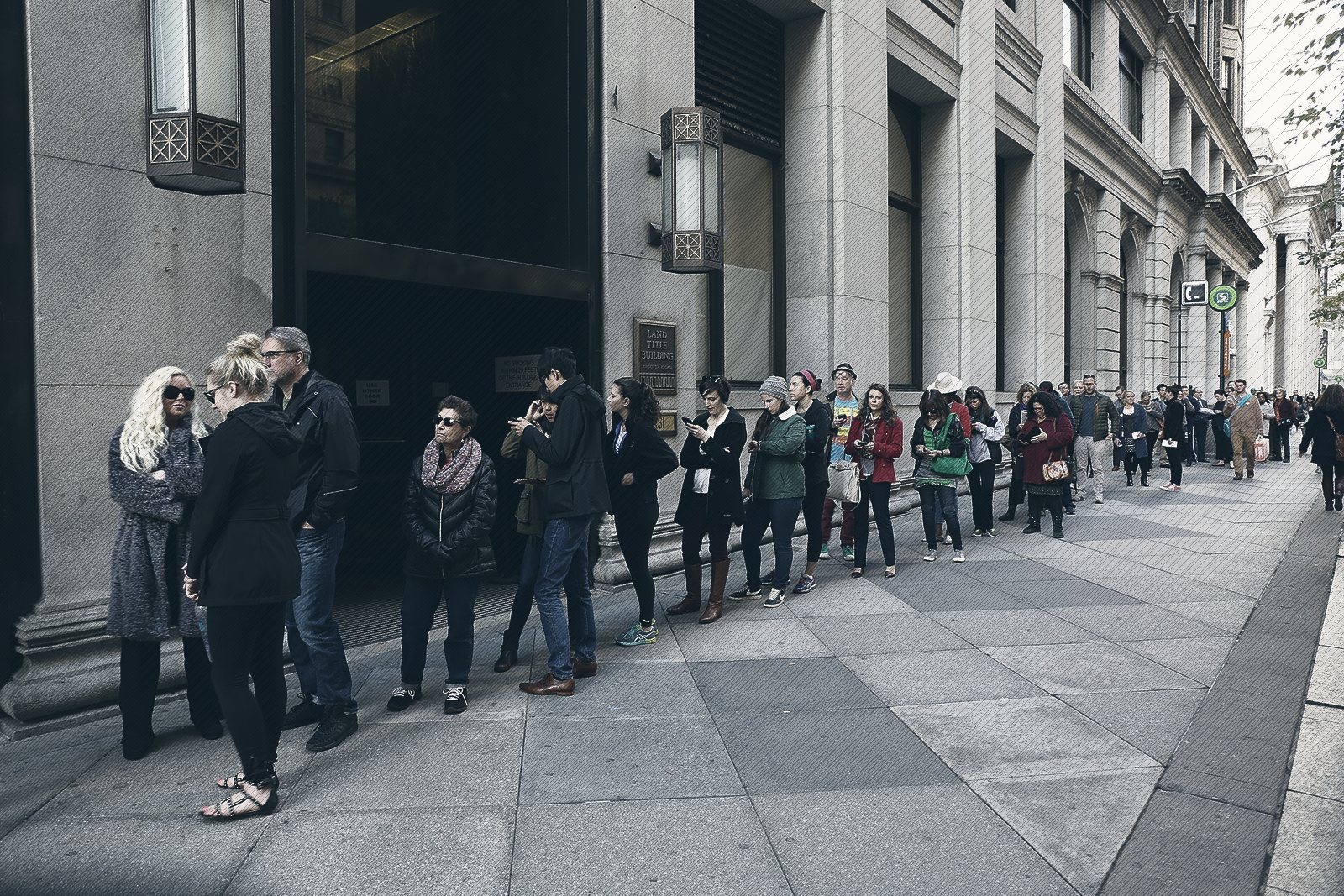
The Trump administration's Justice Department sent about 1,000 federal election monitors to polling places in all 50 states on Tuesday, an unusually large deployment that civil-rights groups say risks intimidating voters in Democratic-leaning cities.
Many of the monitors were sent to Detroit, Philadelphia and Fulton County, Georgia, which includes Atlanta: places with large Black electorates that Donald Trump falsely claimed were sites of fraud after his defeat in 2020. A federal judge rejected a challenge from the NAACP, noting that the monitors would be in plain clothes, unarmed and without powers of arrest. The department says they will observe and not interfere. A legal group has sued it for records on what it calls an "unprecedented" plan.
The courts push back
The deployment followed a series of legal defeats for the administration in the final days of the campaign. On Monday the Supreme Court rejected its emergency request to set aside about 20,000 mail ballots in California that federal officials had flagged as possibly cast by non-citizens. Voting by non-citizens is illegal and, on the available evidence, exceedingly rare. Gavin Newsom, California's governor, responded: "Democracy won."
Tanya Chutkan, a federal judge in Washington, separately barred the administration from sending lists of alleged non-citizen voters to state election officials. In Alaska, a judge dismissed a Justice Department lawsuit that sought to block certification of the Senate result if the Republican incumbent, Dan Sullivan, lost; the department has appealed.
Glitches and floods
Election officials reported scattered practical problems rather than systemic ones. In Westchester County, New York, scanners refused to accept paper ballots for part of the morning; voters continued to vote, with ballots placed in emergency bags to be counted by hand. Letitia James, New York's attorney-general, said her office was monitoring the problem.
In Florida, officials moved 21 polling places in eight counties because of rain and flooding, notifying voters by text and email. Floods also forced the Navajo Nation to relocate five polling places in Arizona and New Mexico.
Turnout is expected to be high. More than 57m Americans voted before polling day, according to the University of Florida's Election Lab, nearly 10m more than at the same point in 2022.