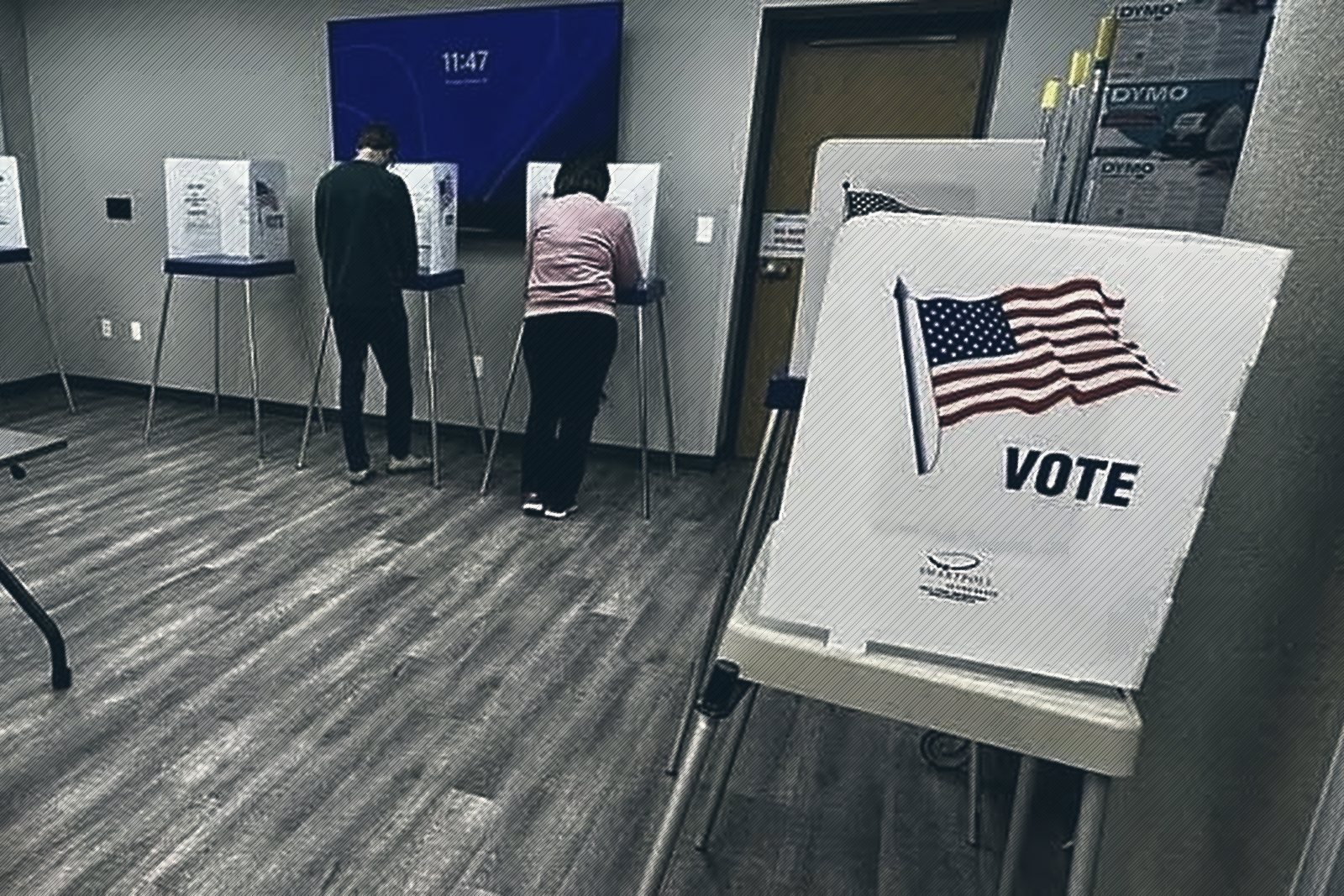
Democrats are projected to win control of the House of Representatives, according to election-night projections reported by CNBC, a result that would end the Republicans' hold on Congress and give Donald Trump's opponents the power to investigate his administration and block his legislative agenda for the final two years of his term.
The party needed a net gain of only three seats. Final counts in many districts, particularly in California, where mail ballots are tallied for days, will take longer, and the size of the new majority remains unclear.
A historic night in Georgia
In Georgia, Keisha Lance Bottoms, a former mayor of Atlanta, won the race for governor, the Associated Press projected, defeating Rick Jackson, a Republican billionaire who founded a medical-staffing firm. She becomes the first Black woman elected governor in the state's history, and ends more than two decades of Republican control of the governor's mansion. Ms Bottoms campaigned on expanding Medicaid, raising the minimum wage to $15 an hour and cutting costs such as the petrol tax.
Her victory came on the same night that Jon Ossoff held Georgia's Senate seat for the Democrats, turning a state Mr Trump won in 2024 into the centre of the party's revival.
The Senate is still open
The battle for the Senate is closer. Democrats flipped North Carolina, where Roy Cooper won the seat left open by the Republican Thom Tillis, and held Georgia and Virginia. They need a net gain of four seats for a majority. Races in Texas, Ohio, Maine, Michigan, Iowa, Kansas and Alaska were still being counted when this article was published.
What a Democratic House means
A Democratic House would give the party subpoena power over the executive branch and control of spending bills, making it far harder for the White House to pass budgets on its own terms or extend its tariffs and tax plans through legislation. Markets have historically treated divided government calmly, but investors will watch for confrontations over government funding and the debt ceiling.
For Mr Trump, the result is the verdict that the exit polls foreshadowed: 43 per cent of voters said they had voted partly to oppose him, and 65 per cent said his policies had made the economy worse.