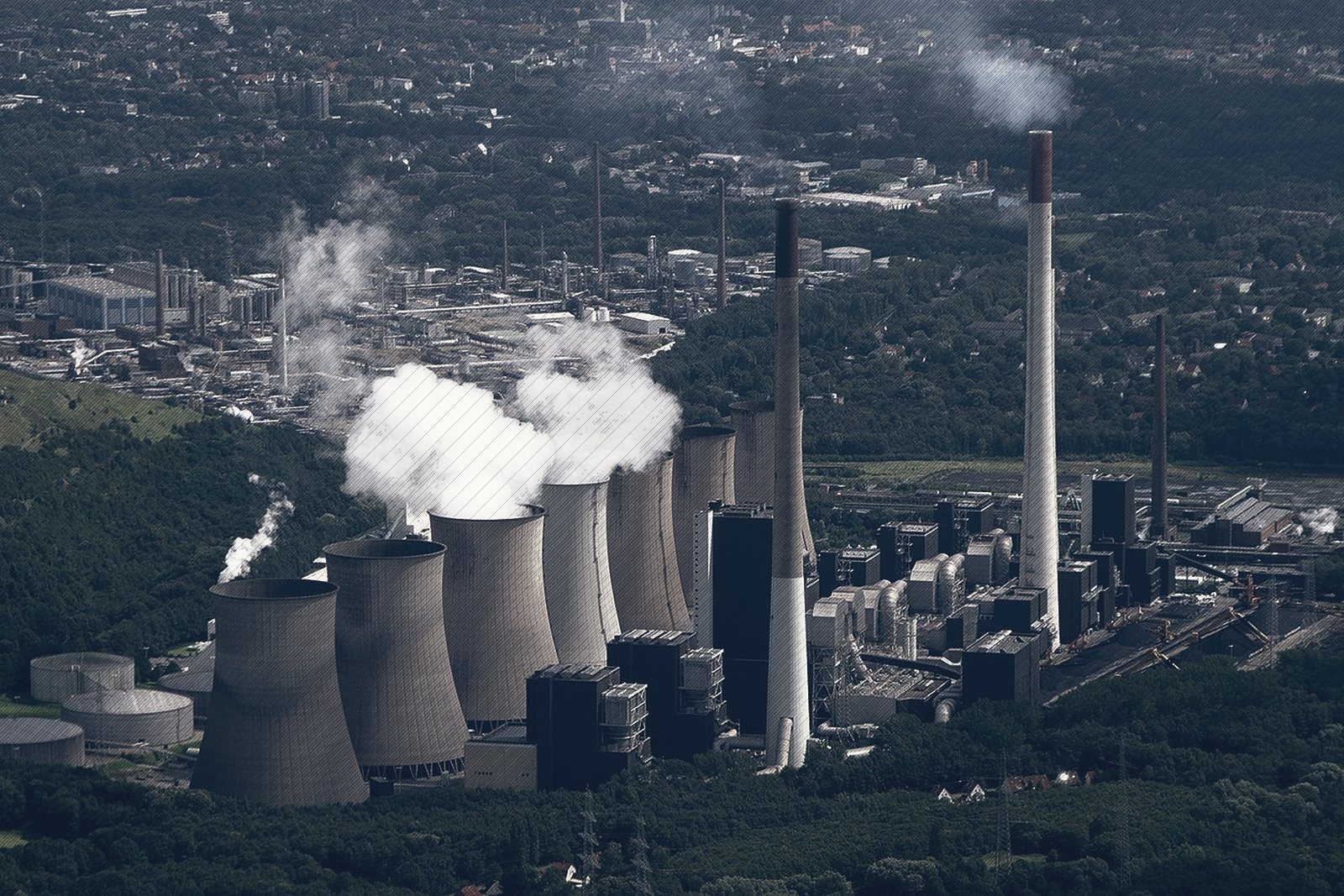
An old power station is not the obvious place to look for the future of artificial intelligence. The buildings are vast, the equipment dated and the land shaped by decades of heavy industry. Some sites have already stopped generating. Others are nearing the end of their working lives.
Yet they have something the technology industry is finding ever harder to obtain: a large connection to the electricity grid. And that connection is becoming valuable.
Uniper, the German energy company that is majority-owned by the state, is close to its first deal to sell or lease a former power station site for a data centre, the Financial Times reported on Monday. The company has identified ten disused sites in Britain, Germany, Sweden and the Netherlands with about 700 megawatts of secured grid capacity between them, enough, on International Energy Agency estimates, for around seven hyperscale data centres. Michael Lewis, Uniper's chief executive, told the newspaper there was "significantly more potential in the pipeline".
The talks are still under way, and no transaction has been announced. But the business case is already plain. Technology companies are spending enormous sums on processors, servers and the buildings that house them. What they cannot always buy quickly is the power infrastructure that makes those investments useful.
"Europe is not going to lose the AI race in the lab," Mr Lewis said. "It will lose it at the substation."
The value of being connected
Building a large data centre takes more than land and a shed. Developers must secure a reliable supply of electricity, obtain approvals and make sure local networks can carry a great deal of extra demand. In the European Union, the IEA says, waiting times for a grid connection range from two to ten years depending on the country. Some projects can be built faster than the power lines needed to run them.
For a developer spending billions on computing equipment, delay is expensive. A server that cannot be switched on earns nothing. A finished building waiting for a connection runs up financing and maintenance costs without delivering the service customers have paid for.
That changes the economics of location. A former industrial site with existing transmission infrastructure can be worth more than an empty field, even if the field is cheaper to buy. The difference is time.
Uniper's opportunity lies in turning infrastructure built for generating electricity into something a different industry urgently needs. It does not have to build or run the data centres itself. It can supply the land, the grid access and the energy expertise, and let others do the rest. That is a very different way of taking part in the AI economy.
The unexpected economics of old infrastructure
The sums could be substantial. UBS analysts have valued comparable deals at about €1m per megawatt, which would put Uniper's 700 megawatts at roughly €700m. That is an indicative figure, not a price: Uniper has not disclosed a value, and actual proceeds would depend on location, contract terms, development costs and how much capacity can really be used.
Still, it shows why energy companies are taking a fresh look at assets once associated with industrial decline. A site that no longer makes sense as a power station may still have valuable land, connections and supporting infrastructure. Change the demand, and the same assets acquire a new commercial purpose.
Others have got there first. RWE sold its former Didcot coal-fired power station site in Oxfordshire to Amazon for €203m last year, and further utilities are studying how their land might serve data centres.
There is a long history of this. Infrastructure built for one generation of industry often proves valuable to the next: railway corridors, ports and telecoms networks have repeatedly found new uses as technology and trade changed. What is different now is the speed at which demand for computing capacity is growing.
How much electricity will AI need?
The long-range forecasts are striking. In a report published on 11 November, BloombergNEF estimated that data centres worldwide could consume 2,354 terawatt-hours a year by 2035, almost four times today's level and about 7 per cent of global electricity demand.
These are projections, not certainties. The outcome will depend on the growth of AI services, gains in computing efficiency and the pace of infrastructure building. But the scale is enough to explain why access to power has become a strategic priority.
Developers are no longer competing only to buy better chips. They are competing for places where those chips can run reliably and affordably. Power prices, grid capacity, cooling and construction timetables increasingly decide what computing infrastructure is worth. A company can negotiate a good price for advanced hardware and then find that the building meant to house it cannot get enough electricity for years. That is a bottleneck no software update can fix.
It is also an opening for businesses far from the traditional technology sector. Utilities, infrastructure owners and companies with suitable industrial land may capture a bigger share of the value created by AI investment than anyone expected.
The environmental complication
The rush for power creates another problem. Some developers are planning to build their own gas-fired generation rather than wait for the grid. BloombergNEF has tracked about 181 gigawatts of proposed gas generation linked to data centres, more than 90 per cent of it in the United States. These are announced plans at different stages; not all will be built.
The motive is understandable. Companies trying to recover huge investments want their facilities running as soon as possible. But the incentive to move fast can clash with longer-term climate goals. BloombergNEF estimates that if every announced on-site gas plant for American data centres were built, they would emit about 152 million tonnes of carbon dioxide equivalent a year more than drawing the same power from the average US grid. It also warns that such plants could keep running long after grid connections arrive. In developed markets such as Europe and the US, it concludes, connecting to the grid is generally the cleaner option.
Reusing industrial sites with established connections may therefore offer more than a financial advantage. Where capacity genuinely exists, it could help developers avoid years of delay without building new fossil-fuel plants just to power their servers.
But an old connection is not an automatic solution. A power station's historical export capacity does not guarantee that the same amount of electricity can be drawn continuously by a data centre; network studies, approvals and upgrades may still be needed. The grid must also keep supplying households, factories and other businesses. Faster access for data centres cannot simply mean passing the cost of grid expansion to everyone else.
Who captures the value?
The AI boom is creating a complicated chain of winners. Chipmakers sell the hardware, cloud companies sell computing services and software developers build the applications customers use. Beneath them sits a physical economy of electricity, land, construction and finance. Companies that control scarce infrastructure may enjoy advantages that have nothing to do with building better AI models. They own assets others need, and which cannot be replicated quickly.
That should change how investors think about the industry. The value of an AI project cannot be judged only by the sophistication of its processors or the expected demand for its services. It also depends on whether it can secure electricity at a reasonable cost, start operating on time and earn enough to justify the capital invested.
Uniper offers a useful illustration. Rather than competing with technology companies, it is looking to earn a return from assets those companies increasingly need. Its advantage is not an AI model. It is infrastructure built over decades.
Whether these projects pay off remains uncertain. Agreements must be signed, technical requirements met and costs justified. But the broader lesson is hard to ignore: the digital economy has never been entirely digital. Its growth depends on physical resources, and some of those are becoming harder to obtain than the technology itself.
For years, the AI race has been framed as a contest over the most advanced models and the largest stock of processors. The next advantage may be far less visible: an electricity connection laid down long before anyone imagined machines that write, design software or sift vast quantities of data.
An old power station looks nothing like the technology industry's picture of the future. Increasingly, it may be one of the places where that future gets built.